
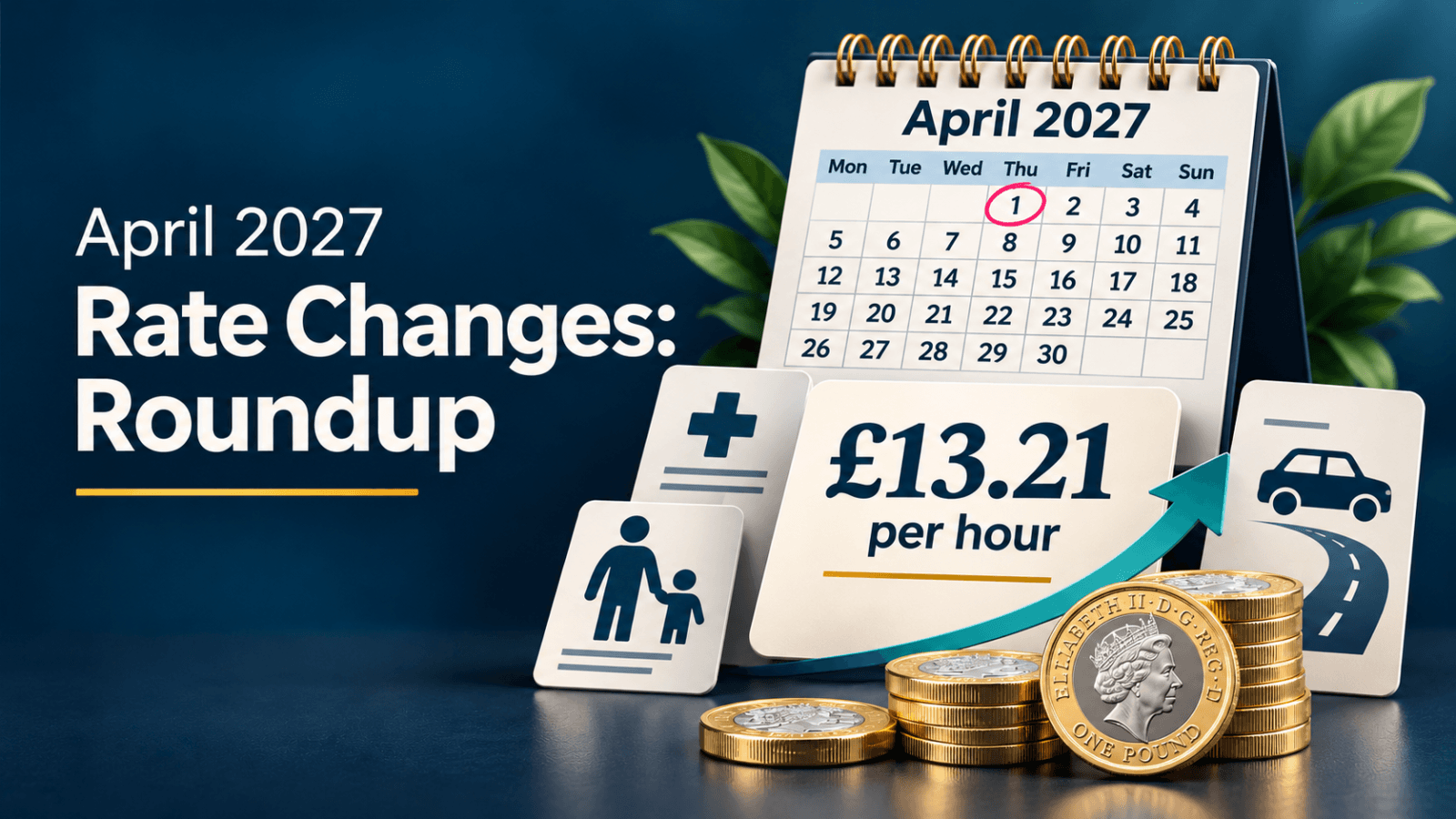
The April 2027 rate changes include announced increases in the National Living Wage and the National Minimum Wage, alongside proposed rises in Statutory Sick Pay and family friendly payments. Annual updates to statutory redundancy pay limits, unfair dismissal basic awards, and the Vento bands are expected to be announced in March 2027.
In Brief
The April 2027 rate changes include a 3.9% rise in the National Living Wage to £13.21 per hour, proposed 3.5% increases in Statutory Sick Pay and family friendly payments, and a higher approved business mileage rate. Revised statutory redundancy pay limits and Vento bands are expected in March 2027.
Key Points
- From 1 April 2027, the National Living Wage rises to £13.21 per hour, with National Minimum Wage rates increasing to £11.27 for workers aged 18–20 and £8.31 for under-18s and qualifying apprentices. The daily accommodation offset rises to £11.53.
- The voluntary Real Living Wage and London Living Wage rates are now £14.10 and £15.45 per hour respectively, with a 1 May 2027 implementation deadline for accredited employers.
- The standard weekly rate of Statutory Maternity Pay, other statutory family friendly payments and Maternity Allowance is proposed to rise from £194.32 to £201.11, with the statutory payments' earnings threshold increasing to £133.
- The standard weekly rate of Statutory Sick Pay is proposed to rise from £123.25 to £127.55.
- From 6 April 2027, the approved mileage rate above 10,000 business miles per tax year is due to rise from 25p to 35p per mile, subject to implementing regulations. The 55p rate for the first 10,000 miles remains unchanged.
- Further April 2027 rate changes are expected to update the £751 cap on a week's pay and the £22,530 maximum statutory redundancy payment and unfair dismissal basic award from 6 April 2027.
- The unfair dismissal compensatory award cap will be abolished for dismissals taking effect on or after 1 January 2027.
- Revised Vento bands for injury to feelings awards are expected in March 2027, applying to claims presented on or after 6 April 2027.
April 2027 Rate Changes
The first April 2027 rate changes take effect on 1 April 2027. The Government announced the new minimum wage rates on 28 October 2026, accepting the Low Pay Commission’s recommendations. The National Living Wage remains the statutory minimum for workers aged 21 and over.
National Living Wage & National Minimum Wage
Employers must apply the new living wage and minimum wage rates from the first pay reference period beginning on or after 1 April 2027. The apprentice rate applies to apprentices under 19, or aged 19 and over in their first apprenticeship year. Older apprentices who have completed that first year receive the rate for their age.
Real Living Wage & London Living Wage
Employers preparing for the April 2027 rate changes should also check their Living Wage accreditation commitments. The Living Wage Foundation announced its latest rates on 15 October 2026. These voluntary rates are separate from the statutory minimum wage.
Accredited employers should implement these increases as soon as possible and by 1 May 2027.
Family Friendly Payments
The proposed April 2027 rate changes for statutory family friendly payments were published in the Government’s 2027/28 benefit and pension rates table on 11 November 2026. The standard weekly rate increases by £6.79, from £194.32 to £201.11, under these proposals.
Statutory Maternity Pay and Statutory Adoption Pay will continue to be paid at 90% of average weekly earnings for the first six weeks, followed by the lower of the proposed new weekly rate of £201.11 or 90% of average weekly earnings for the next 33 weeks. The other four statutory family friendly payments are calculated using the same lower-of-two-rates formula throughout. The qualifying earnings threshold for all six statutory payments is set to increase from £129 to £133 per week.
The proposed April 2027 rate changes will also increase the maximum weekly rate of Maternity Allowance from £194.32 to £201.11. For eligible employed or recently employed claimants, Maternity Allowance is payable for up to 39 weeks at the lower of the standard weekly rate or 90% of average weekly earnings. The £30 weekly qualifying earnings threshold will remain unchanged.
Eligible self-employed claimants will receive between £27 and £201.11 per week for up to 39 weeks, depending on their National Insurance contribution record. Those qualifying through unpaid work in their spouse's or civil partner's business will continue to receive £27 per week for up to 14 weeks.
The precise commencement dates will be added when confirmed. Our article on Statutory Maternity Pay examines the proposed increases in family friendly payments in more detail.
Statutory Sick Pay (SSP)
The proposed April 2027 rate changes also include an increase in the standard weekly rate of Statutory Sick Pay (SSP). Under the existing SSP rules, eligible employees will continue to receive the lower of the statutory weekly rate or 80% of average weekly earnings.
Business Mileage Allowances
The April 2027 rate changes also include a higher tax-approved mileage rate for employees using their own cars or vans for business journeys. The Budget 2026 announcement provides for an increase from 6 April 2027, subject to implementing regulations.
The new approved mileage rates will increase the amount that employers can reimburse tax-free for business mileage above 10,000 miles in a tax year. Although employers are not legally required to reimburse mileage at these rates, they should review their expenses policies and any contractual commitments in light of the increase.
Statutory Redundancy Pay and Unfair Dismissal Basic Awards
The April 2027 rate changes to the statutory cap on a week’s pay have not yet been announced. The revised limit is expected to be published in March 2027 and apply from 6 April 2027. It affects statutory redundancy pay and ordinary unfair dismissal basic awards.
The existing figures are set by the Employment Rights (Increase of Limits) Order 2026. Redundancy payments depend on age, completed service and eligible weekly pay, with a maximum of 20 years’ service counted.
Unlike the basic award, the statutory cap on the compensatory award for unfair dismissal will be abolished under the Employment Rights Act 2025 where the effective date of termination falls on or after 1 January 2027. The existing cap, comprising the lower of £123,543 or 52 weeks’ gross pay, will continue to apply where applicable to dismissals taking effect before that date.
Vento Bands
The April 2027 rate changes are also expected to include the annual uprating of the Vento bands, which employment tribunals use to determine appropriate compensation for injury to feelings in discrimination claims. The bands are reviewed annually to take account of inflation, with the revised figures expected to be published in March 2027.
The existing figures are set out in the Employment Tribunal Presidents’ guidance issued in March 2026. The lower band covers less serious cases, the middle band covers more serious cases that do not warrant an award in the upper band, and the upper band covers the most serious cases. Unlike the statutory limits on redundancy payments and unfair dismissal basic awards, the Vento bands provide guidance rather than absolute limits on compensation, with awards exceeding the upper band possible in exceptional cases.
Preparing for the April 2027 Rate Changes
The April 2027 rate changes will have significant implications for employment costs, statutory payment entitlements and potential employment tribunal liabilities. Whilst employers can begin preparing for the increases already announced, further developments are expected in the months ahead. We will continue to update this roundup of the April 2027 rate changes as the outstanding rates, statutory limits, Vento bands and commencement dates are confirmed.
Employers: What This Means
Employers should prepare for the April 2027 rate changes by reviewing payroll systems, contractual commitments, employment costs and potential employment tribunal liabilities.
- National Minimum Wage compliance: Apply the new rates from the first pay reference period beginning on or after 1 April 2027. Check age bands, apprentice eligibility, unpaid working time and deductions.
- Living Wage accreditation: Accredited employers should implement the new Real Living Wage and London Living Wage rates by 1 May 2027 and check their commitments on third-party contracted staff.
- Statutory Sick Pay and family friendly payments: Update payroll for the proposed April 2027 rate changes, including the £133 earnings threshold for family friendly payments, once the rates and commencement dates are confirmed.
- Business mileage allowances: Review expenses policies and contractual reimbursement commitments. The higher tax-approved mileage rate does not automatically oblige employers to increase reimbursement rates.
- Statutory redundancy pay: Reassess projected redundancy costs once the revised statutory limits are published, particularly where redundancies are planned around 6 April 2027.
- Employment tribunal liabilities: Review compensation exposure, with the unfair dismissal compensatory award cap abolished for dismissals taking effect on or after 1 January 2027 and increases expected in the maximum basic award and Vento bands.

