
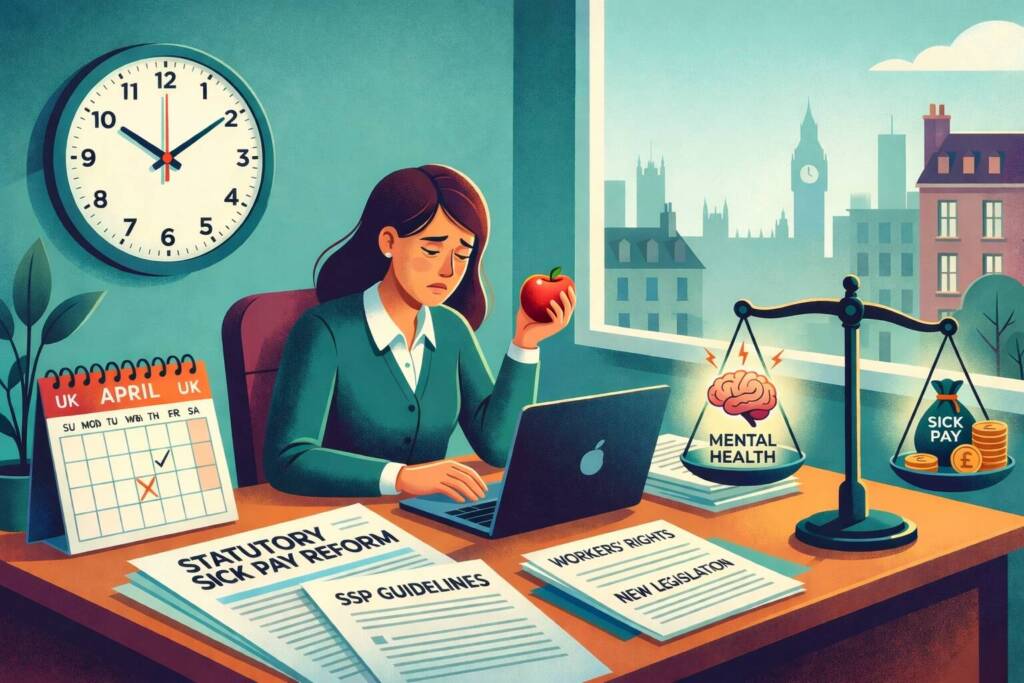
Stress Awareness Month 2026
April marks Stress Awareness Month, an annual campaign focused on improving understanding of stress, its effects, and the steps that individuals and organisations can take to manage it more effectively. The 2026 theme, #BeTheChange, reflects the idea that meaningful improvements in wellbeing often begin with small, practical changes in behaviour, culture and support.
Key Points
- Stress Awareness Month 2026: The theme #BeTheChange highlights the importance of small, practical steps in improving workplace wellbeing, with employers expected to take proactive measures to manage stress.
- Scale of Workplace Stress: HSE data shows 964,000 UK workers suffered from work-related stress, depression or anxiety in 2024/25, resulting in 22.1 million working days lost.
- Burnout and Younger Workers: Mental Health UK reports that 91% of adults experienced high stress, with younger workers (18–24) particularly affected, including 39% taking time off due to stress-related mental health issues.
- Presenteeism Risk: Working while unwell remains a significant issue, reducing productivity, prolonging recovery and increasing the risk of longer-term absence.
- Employer Legal Duty: Employers must manage work-related stress as a workplace risk under the Health and Safety at Work etc. Act 1974 and the The Management of Health and Safety at Work Regulations 1999, including carrying out suitable and sufficient risk assessments and taking reasonably practicable steps to address its causes, with HSE guidance providing the benchmark for compliance.
- SSP Reform from April 2026: Statutory Sick Pay becomes payable from day one, the Lower Earnings Limit is removed, and SSP is payable at 80% of average weekly earnings or £123.25, whichever is lower.
- Employer Impact of SSP Reform: Survey data indicates that employers anticipate higher absence rates and increased administrative demands following SSP reform. However, the changes also present an opportunity to reduce presenteeism and support employee wellbeing.
Stress is a normal response to pressure, but where it becomes prolonged or excessive it can have a serious impact on mental health, physical health and workplace performance. Common signs include fatigue, difficulty concentrating, irritability and physical symptoms such as headaches. It is also important to distinguish stress from burnout. Stress may still allow a person to function, albeit under strain, whereas burnout is generally associated with longer-term emotional exhaustion, detachment and reduced effectiveness. Mental Health UK says its 2026 Burnout Report found that 91% of adults experienced high or extreme levels of pressure or stress in the previous year.
The latest HSE data underlines the scale of the issue at work. In 2024/25, an estimated 964,000 workers in Great Britain were suffering from work-related stress, depression or anxiety. HSE also reports that these conditions accounted for 22.1 million working days lost, with those affected losing an average of 22.9 days per case.
Younger workers appear to be particularly affected. Mental Health UK’s Burnout Report 2026 found that one in five workers took time off due to poor mental health caused by stress, rising to 39% among 18–24-year-olds. The same report also found that only around one in four people felt their employer genuinely prioritised and supported mental health in the workplace.
While sickness absence is a visible consequence of workplace stress, presenteeism can present a more significant long-term risk. Employees who continue working while unwell are often less productive, more prone to errors, and at greater risk of longer-term absence. In many cases, the cumulative impact of presenteeism exceeds that of absence, particularly where underlying issues such as workload or workplace culture remain unaddressed.
Employers are required to manage work-related stress as a workplace risk under the Health and Safety at Work etc. Act 1974 and the Management of Health and Safety at Work Regulations 1999, including carrying out suitable and sufficient risk assessments and taking reasonably practicable steps to address its causes. HSE guidance (including the Management Standards) provides the recognised benchmark for compliance. In practice, this involves identifying the underlying causes (such as excessive workloads, lack of role clarity or poor working relationships) and taking appropriate steps to mitigate those risks. This may include reviewing job design and demands, equipping managers to recognise early warning signs, encouraging open dialogue around wellbeing, supporting flexible working where appropriate, and ensuring employees can readily access support services such as Employee Assistance Programmes or occupational health.
Stress Awareness Month is therefore a timely reminder that prevention often depends on relatively modest interventions: a better conversation, a more realistic workload, earlier managerial support, or clearer expectations. Those small changes can have a significant impact on both employee wellbeing and organisational resilience.
Statutory Sick Pay Reform: Employer Concerns and Potential Impact
From 6 April 2026, Statutory Sick Pay (SSP) becomes payable from the first day of sickness absence, with the previous waiting period removed. At the same time, the Lower Earnings Limit is abolished, significantly widening eligibility. SSP will also be paid at 80% of average weekly earnings or the flat weekly rate, whichever is lower. These are substantial changes and will have both payroll and operational implications for employers.

In principle, as we highlighted in an earlier article, many employers are likely to support the introduction of earlier financial support for genuinely unwell employees. Day-one SSP may reduce the pressure on staff to attend work when sick, which in turn may help limit presenteeism, improve recovery, and reduce the spread of illness in the workplace. This is particularly relevant in environments where employees may previously have felt unable to afford a short period of absence.
Nevertheless, employers have concerns about the impact of the new rules. A recent survey by Brightmine, for instance, has found that 54.7% of employers anticipate increased costs associated with sickness absence, alongside greater administrative demands on HR (51.3%) and line managers (48.7%). Employers also report concerns about potential increases in short-term absences (46.2%), longer absence durations (43.6%), and risk of inappropriate use where sick pay is available from day one (37.6%).
For employers, the immediate priority should be preparation. Absence policies, payroll systems and manager guidance should all be reviewed ahead of implementation. Organisations should also consider whether existing return-to-work processes, wellbeing support and sickness reporting arrangements are sufficient to manage an environment in which more employees will qualify for SSP from day one. While the reform may increase cost and administrative burden, it also presents an opportunity to reduce presenteeism and promote a healthier, more sustainable workplace culture.
Employers: What This Means
- Manage Stress as a Legal Risk: Ensure compliance with statutory duties by treating work-related stress as a workplace risk, carrying out suitable and sufficient risk assessments, and taking reasonably practicable steps to address its causes.
- Identify and Address Root Causes: Review workloads, job design, management practices and workplace culture to mitigate common stress triggers such as excessive demands, lack of role clarity and poor working relationships.
- Train and Support Managers: Equip line managers to recognise early warning signs of stress, manage absence appropriately, and respond consistently to wellbeing concerns.
- Strengthen Wellbeing Support: Promote open dialogue around mental health and ensure employees can readily access support services such as Employee Assistance Programmes or occupational health.
- Prepare for SSP Reform: Update absence policies, payroll systems and internal guidance to reflect day-one SSP, removal of the Lower Earnings Limit, and revised calculation methods.
- Review Absence Management Processes: Ensure reporting procedures, return-to-work processes and monitoring systems are robust enough to manage potential increases in short-term and longer absences.
- Balance Risk and Opportunity: While SSP reform may increase cost and administrative demands, it also provides an opportunity to reduce presenteeism, support recovery and improve overall workforce productivity.