
Key Points
- Office attendance is increasing across the UK, with 38% of workers spending more days in the office than a year ago, particularly among younger employees and professional sectors.
- UK office utilisation has reached its highest level in several years (38.1%), indicating more structured employer expectations around workplace presence.
- Hybrid working remains widespread, with 28% of workers continuing to split their time between home and the workplace, though access remains uneven.
- Many employers are moving away from informal hybrid arrangements and introducing clearer return-to-office requirements tied to collaboration, performance and culture.
- Employees report increased pressure around professional visibility and progression as office attendance rises, particularly among early- and mid-career workers.
- Looking ahead to 2026, economic pressures may trigger a wave of business failures among low-productivity “zombie” firms, potentially increasing unemployment in the short term but supporting longer-term economic restructuring.
Increased Office Attendance: How Employee Behaviour Is Changing
As employees continue to adjust following several years of remote and hybrid working, a new survey by TK Maxx points to a clear shift towards increased office attendance. While flexible working remains an established feature of many employers, 2025 appears to have marked a recalibration rather than a reversal, with employers and employees reassessing how office-based work fits into modern working life.
Shift Back Towards Office Working
The survey found that 38% of workers are now spending more days in the office than they did a year ago. This trend is particularly pronounced among younger workers, with over half (54%) of those aged 16–24 reporting increased office attendance. Certain sectors, notably IT, telecommunications and financial services, have led this shift, with close to half of employees in these industries now attending offices more regularly.
Additional data reinforces this picture. Office occupancy tracking shows that average UK office utilisation has reached its highest level in several years (38.1%), suggesting that attendance expectations are becoming more structured. At the same time, Office for National Statistics data confirms that hybrid working remains widespread, with 28% of workers continuing to split their time between the home and the workplace. Access to hybrid working, however, remains uneven and is more common in higher-paid and professional roles.
By contrast, sectors such as retail and hospitality have seen little change, reflecting the fact that remote working was never a realistic option. Overall, however, the direction of travel is clear: office attendance is increasing across much of the UK economy.
Employer-Led Return-to-Office Expectations
This shift has not occurred in a vacuum. In many organisations, increased office attendance is being driven by clearer employer expectations rather than organic employee preference. As we explored in a previous article on return-to-office mandates, a growing number of employers are moving away from informal hybrid arrangements and introducing minimum office attendance requirements, often framed around collaboration, performance, or organisational culture. These mandates vary widely in scope and enforcement, but they mark a clear move towards greater structure after several years of flexibility-driven experimentation.
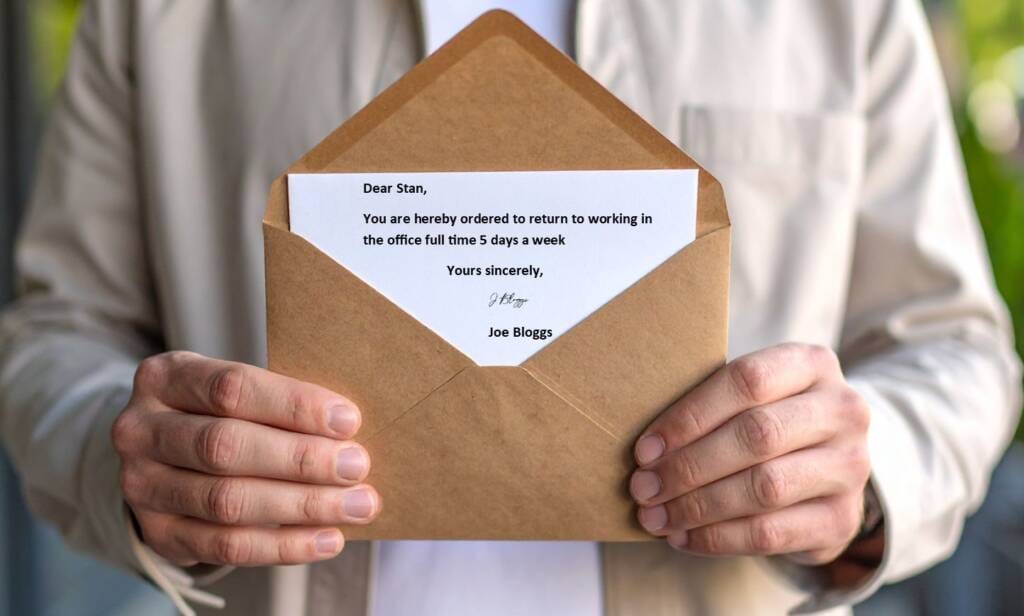
For employees, this has altered the dynamics of hybrid working. Office attendance is increasingly perceived not simply as optional flexibility, but as an implicit requirement tied to visibility, progression and workplace integration. For employers, the challenge lies in implementing these expectations consistently and lawfully, while managing employee relations and avoiding perceptions of unfairness or arbitrariness.
Hybrid Working and the Need for Clarity
Despite the overall shift, the transition has not been seamless. Hybrid working models have created uncertainty for many employees, particularly around expectations of when office attendance is required. Around 37% of workers report that hybrid arrangements make day-to-day decisions more complicated, with younger employees most likely to feel this uncertainty.
This lack of clarity can affect morale and engagement, particularly where expectations vary between teams or are informally enforced. For employers, the challenge is no longer whether hybrid working should exist, but how it should operate in practice. Clear, consistently applied policies are becoming increasingly important as organisations move away from ad hoc arrangements towards more defined models of attendance.
Professional Pressures and Changing Motivations
The return to office-based working has sharpened attention on professional presentation and visibility. Approximately four in ten employees report increased pressure to present a professional image, with this effect most pronounced among those aged 25–34. For early- and mid-career professionals, regular office presence is often viewed as integral to progression, networking and performance assessment.
That said, the return to office routines is not viewed entirely negatively. Many employees report that office attendance provides structure, social interaction and a clearer separation between work and home life. Nearly a third describe dressing for work as an opportunity for self-expression, while a quarter say it helps them feel motivated and prepared for the working day.
Looking Ahead
The evolving return to office life is less about abandoning flexibility and more about redefining it. Increased attendance reflects a growing emphasis on collaboration, visibility and organisational culture, but it also highlights the need for clear communication and inclusive policies.

Employers that provide clarity around attendance expectations, while remaining responsive to differing needs across their workforce, are likely to be best placed to sustain engagement and productivity. As the UK workplace continues to evolve, the most successful organisations will be those that treat the return to the office not as a reset to pre-pandemic norms, but as an opportunity to establish a more balanced and intentional approach to working life.
2026: A Potential Reckoning for Zombie Firms
The economy enters 2026 at a critical point, with mounting pressure upon long-surviving but low-productivity “zombie” firms expected to result in an increase in business failures and associated job losses. Persistently higher interest rates, elevated energy costs and sustained increases in the National Minimum and Living Wage have collectively eroded the viability of these businesses, which have operated on thin margins for extended periods.
This process of market correction, often described as “creative destruction”, is likely to lead to short-term disruption according to a new report from the Resolution Foundation, including higher unemployment and workforce displacement. However, it is also expected to release capital, labour and investment towards more productive and innovative enterprises, supporting longer-term economic renewal and productivity growth.
What This Means for Employers
- Employers should assess whether their return-to-office expectations are sufficiently clear and consistently applied to minimise legal and employee relations risk.
- Hybrid working arrangements should be reviewed to reduce ambiguity, particularly around minimum attendance requirements and team-level discretion.
- Greater emphasis on visibility and presence may increase employee relations risk if progression or performance perceptions become linked to office attendance.
- Dress codes and workplace standards may need updating to reflect changing expectations while remaining proportionate and inclusive.
- Rising office attendance should be aligned with clear business objectives (such as collaboration or training) to support engagement and avoid disengagement or attrition.
- Wider economic pressures heading into 2026 may require workforce planning that balances cost control, productivity and potential restructuring risk.