

This article looks at the contentious issue of open-plan offices.
Open-Plan Offices
70% Of Employers Have Them
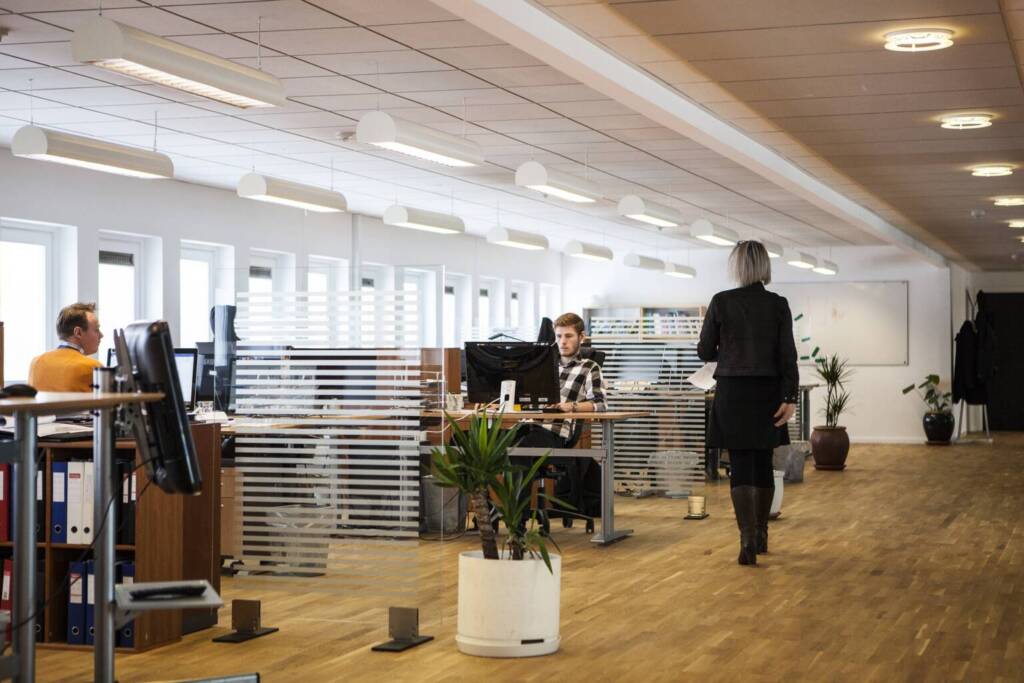
Around 70% of employers in the United States operate some kind of open-plan office system. The objective behind the move towards them in terms of the future of work was to promote greater collaboration amongst employees and to reduce costs.
Employees
Nevertheless, open-plan offices are widely disliked by workers. In one article on the issue, for example, Alison Green contended that: "Of all the workplace trends that inspire grumbling.....perhaps none generate as much vitriol as “open offices,” those wide-open workspaces with no private offices or cubicles. For many workers, the noise, distractions, and lack of privacy make open offices a modern torture device."

In another article in Scientific American, George Musser pointed out: "The writing has been on the [wall]... since the very first survey....was published in 1970. “Few … like a completely open plan with little privacy,” the author wrote. The respondents—358 employees at 18 companies—complained about noise, distraction and soullessness.....Dozens of recent surveys have recapitulated these findings. It's now well established that open-plan offices fail to accomplish one of their major stated goals—increasing collaboration. Instead,...they drive workers into more isolation....The pandemic also reminded everyone that open offices are germ-filled petri dishes...[Moreover], in 1995 a Finnish study found that sharing an office increased the chance of catching multiple colds a year by a third".
Divide Amongst Employers & Workers
What all this highlights is that there is a divide amongst employers and employees about open-plan offices. Whilst they are the preferred option amongst employers, they are not as liked by employees
Given all this, what are the advantages and disadvantages of open-plan offices?

Advantages
The advantages of open-plan offices include the following:-
- Cost-Effectiveness: One of the primary advantages of open-plan offices is their cost-effectiveness. By eliminating the need for individual private offices, companies can save significantly on construction and maintenance costs. The open layout allows for more efficient use of space, reducing the overall square footage required per employee. This can also lead to lower utility bills as heating, cooling, and lighting are easier to manage in a large, open area compared to multiple enclosed spaces.
- Enhanced Communication / Fostering Collaboration: Open-plan offices are designed to promote collaboration and better communication by creating an environment where employees can easily interact with one another. The lack of physical barriers enables spontaneous brainstorming sessions, cross-functional teamwork, quick discussions and impromptu meetings. This ease of interaction can lead to faster decision-making and problem-solving. It also encourages a culture of openness and transparency, where information flows more freely across different levels of the organization. This collaborative atmosphere can lead to innovative ideas and solutions that might not emerge in a more isolated setting.
- Increased Flexibility: The open layout of these offices provides greater flexibility in terms of workspace configuration. Companies can easily reconfigure desks and workstations to accommodate changing team sizes or project needs. This adaptability is particularly beneficial for growing companies or those that frequently undertake collaborative projects requiring different team dynamics.
- Improved Supervision: Managers find it easier to supervise and engage with their teams in an open-plan office. The visibility allows managers to monitor workflow and productivity more effectively without the need for constant check-ins or formal meetings. This can lead to quicker identification of issues and more immediate support for employees who may need assistance.
- Increased Natural Light: Open-plan offices often allow for better distribution of natural light compared to traditional office layouts with many enclosed spaces. Exposure to natural light has been linked to improved mood, increased productivity, and overall better health outcomes for employees. A well-lit environment also reduces the need for artificial lighting, contributing to energy savings.
- Encouraging Equality: By placing all employees in the same type of workspace, open-plan offices help foster a sense of equality within the organization. There is no visible hierarchy based on office size or location, which can contribute to a more inclusive company culture. Employees may feel more valued and respected when they see that everyone, regardless of rank, shares the same working conditions.
- Better Use of Technology: With an open-plan design, integrating modern office technologies becomes easier. Shared resources such as printers, scanners, and collaborative tools like interactive whiteboards or video conferencing setups are more accessible in a communal space. This accessibility supports efficient workflows and enhances overall productivity by streamlining the use of technological resources.

Disadvantages
The disadvantages of open-plan offices include the following:-
- Noise and Distractions: Open-plan offices are notorious for their high noise levels and frequent distractions. Without walls or partitions, conversations, phone calls, and office equipment sounds permeate the entire workspace. This constant background noise can significantly hamper concentration and productivity, making it difficult for employees to focus on tasks that require deep thinking or undisturbed attention. Studies have shown that the cognitive load required to filter out these distractions can lead to mental fatigue and reduced work efficiency.
- Lack of Privacy: In an open-plan setting, privacy is a rare commodity. Employees often feel exposed as they cannot have confidential conversations or work on sensitive projects without the risk of being overheard or seen by others. This lack of privacy can lead to discomfort and stress, as workers may feel they are constantly being monitored. The inability to retreat into a private space for a moment of solitude or quiet reflection can also negatively impact mental well-being.
- Decreased Collaboration: Contrary to one of its main objectives, open-plan offices may actually hinder collaboration. The lack of defined spaces can make it challenging for teams to hold focused meetings or brainstorming sessions without interruptions. Additionally, the constant presence of colleagues can lead to social overload, causing employees to withdraw and communicate less frequently. Research has indicated that open offices often result in a paradoxical increase in digital communication over face-to-face interactions.
- Health Concerns: Open-plan offices can be breeding grounds for germs and illnesses. The close proximity of employees means that viruses and bacteria can spread more easily through the air or via shared surfaces. This was particularly highlighted during the COVID-19 pandemic but has long been an issue with common colds and flu. Studies have found that workers in open offices are more likely to take sick leave due to the higher risk of infection.
- Reduced Job Satisfaction: The combination of noise, distractions, and lack of privacy in open-plan offices contributes to lower job satisfaction among employees. Many workers report feeling less valued when they are placed in such environments, interpreting the lack of personal space as a sign that their comfort is not a priority for their employer. This dissatisfaction can lead to higher turnover rates as employees seek out workplaces that offer better conditions. As J. Maureen Henderson stated in a Forbes article several years ago, "At worst, [open-plan offices are] considered [by workers as] little more than white-collar cattle stalls."
- Increased Stress Levels: Working in an open-plan office can elevate stress levels due to constant interruptions and the pressure of being observed. The inability to control one's environment—such as adjusting lighting or temperature—adds another layer of stress. Over time, this chronic stress can lead to burnout, decreased morale, and even physical health issues like headaches and hypertension.
- Impaired Work-Life Balance: Open-plan offices often blur the lines between professional and personal life. The lack of barriers makes it easy for work discussions to spill over into break times or after hours, reducing opportunities for employees to mentally disconnect from work. This constant engagement can erode work-life balance, leading to decreased overall well-being and potentially affecting personal relationships outside of work.
Conclusion
Whilst open-plan offices offer several advantages such as cost-effectiveness, enhanced communication, increased flexibility, improved supervision, and efficient use of technology, they are not without their drawbacks. The noise and distractions inherent in such environments can significantly impact productivity and concentration. Additionally, the lack of privacy and increased health risks pose serious concerns for many employees. Furthermore, contrary to their intended purpose of fostering collaboration, open-plan offices can sometimes lead to decreased face-to-face interactions and higher stress levels. Ultimately, the decision to implement an open-plan office should be carefully weighed against these potential disadvantages to ensure it aligns with the needs and well-being of the workforce.

