
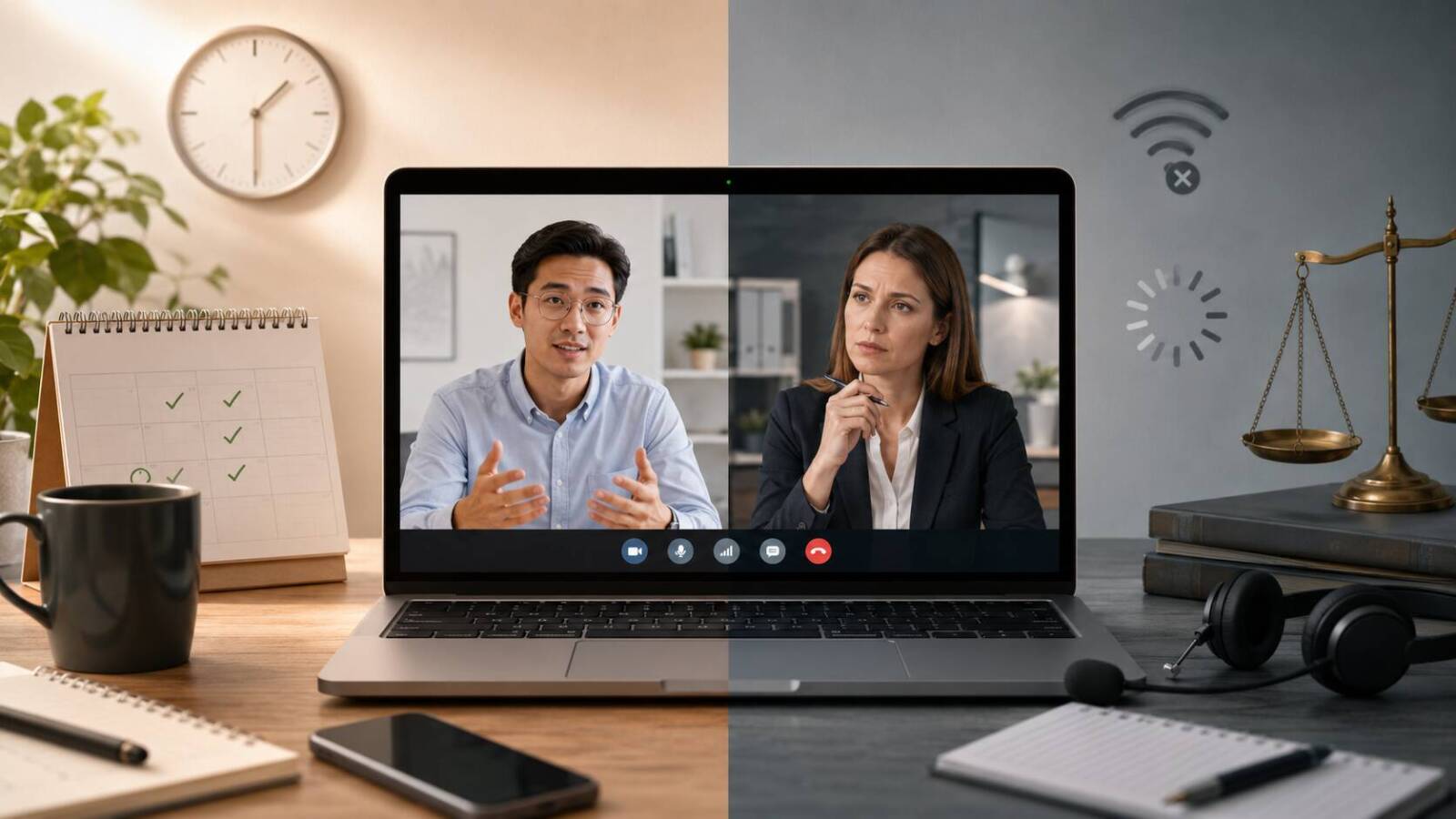
Video interviews have become a familiar part of the recruitment process. Employers now routinely use platforms such as Microsoft Teams and Zoom to assess candidates, particularly during the early stages of recruitment or where applicants and interviewers are based in different locations.
In Brief
Video interviews are now widely used because they can reduce costs, accelerate recruitment and make opportunities accessible to candidates in different locations. However, they may also create technological, practical and accessibility barriers, limit personal interaction and affect how some candidates perform. Employers should consider the role, the stage of recruitment and the candidate’s individual circumstances, including whether reasonable adjustments or an alternative interview format are required. Any recording must also comply with UK data-protection law.
Key Points
- Video interviews can widen the available talent pool by removing geographical and travel barriers.
- They may reduce recruitment costs and make interviews easier and quicker to schedule.
- Technical problems, unsuitable surroundings and limited digital resources can disadvantage some candidates.
- Remote interaction may make it harder to assess rapport, non-verbal communication and interpersonal suitability.
- Employers should ask candidates invited to interview whether they require reasonable adjustments and consider an alternative format where appropriate.
- Before recording an interview, employers must have a clear purpose and appropriate lawful basis, inform the candidate in advance and explain any right to object. They should also obtain the candidate’s agreement to the recording, restrict access and retain it only for as long as necessary.
Growing Scrutiny of Video Interviews
The growing use of video interviews has provoked debate as to whether they provide an effective and fair means for assessing candidates. Prime Minister Andy Burnham recently criticised what he described as the culture of interviewing through Zoom or Teams. He questioned whether the format gives young people a proper opportunity to demonstrate their personality and potential, suggesting that it may instead favour candidates who are more experienced in delivering polished or rehearsed answers.
The Prime Minister’s comments also raise wider questions for employers. Does conducting an interview remotely make recruitment more accessible, efficient and flexible, or can it affect the quality of the interaction and place some candidates at a disadvantage? Can employers assess communication skills, enthusiasm and suitability as effectively through a screen as they can in person? There are also practical considerations, including travel, scheduling, technology, disability and the candidate’s access to a suitable interview environment.
The answers may depend on the role being filled, the stage of the recruitment process and the way in which the interview is conducted. Employers must therefore consider not only whether video interviews are convenient, but also whether they enable candidates to be assessed fairly and effectively.
Given this, we now look at the merits of video interviews in terms of their advantages and disadvantages.
Advantages
The principal advantages of video interviews include the following:-
- Wider Access to Talent Pools: Video interviews remove geographical barriers, allowing employers to reach candidates from a much broader area. This enables organisations to access talent from different cities, regions, or even countries without incurring the costs and logistical challenges of travel. As a result, businesses can more easily attract specialised skills that may not be available locally. For candidates, this widens their employment opportunities and allows them to apply for roles they might otherwise have overlooked due to location constraints. Additionally, remote interviewing supports diversity and inclusion by giving individuals from underrepresented backgrounds or remote areas a fairer shot at positions for which they are qualified.
- Cost Efficiency: Conducting interviews via video significantly reduces expenses associated with traditional in-person interviews. Employers save on travel, accommodation, and venue booking costs for both candidates and interviewers. These savings can be particularly significant for roles that attract applicants from outside the local region or require multiple interview rounds. Candidates also benefit financially, as they do not need to spend money on transportation or take as much time off work. The cost-effectiveness of video interviews allows companies to allocate resources more strategically within their recruitment processes while still engaging with high-quality talent.
- Time Savings and Scheduling Flexibility: Video interviews streamline the scheduling process by eliminating the need to coordinate travel and physical meeting spaces. Both interviewers and candidates can participate from locations convenient to them, making it easier to find mutually suitable times—even across different time zones. This flexibility results in faster hiring cycles since interviews can be arranged quickly and efficiently, reducing delays often caused by logistical challenges. Additionally, recruiters can conduct back-to-back interviews with minimal downtime between sessions, increasing overall productivity and enabling organisations to fill vacancies more rapidly.
- Consistency in Candidate Assessment: Video interviews can support a more consistent assessment process where employers ask candidates the same role-relevant questions and evaluate their answers against clearly defined criteria. The format can also make it easier for several decision-makers to participate in the interview or review the assessment collectively. Where recording is considered necessary, it may allow authorised decision-makers to revisit candidates’ responses rather than relying solely on notes or recollection. However, interviews should not be recorded routinely. Employers must first establish a clear purpose and appropriate lawful basis and comply with their wider data-protection obligations.
- Enhanced Accessibility for Candidates: Video interviews can make recruitment more accessible for some disabled candidates and those with mobility, health or travel difficulties. Removing the need to attend an employer’s premises may reduce physical barriers, fatigue, travel time and the need to navigate an unfamiliar environment. Some platforms also provide features such as live captions, keyboard controls and compatibility with assistive technology. However, accessibility will depend on the platform used and the candidate’s individual circumstances. Employers should not assume that a video interview will meet every candidate’s needs and should ask whether reasonable adjustments are required, which may include changes to the format, technology or timing of the interview.
- Reduced Environmental Impact: The elimination of travel related to in-person interviews directly contributes to a smaller environmental footprint for both employers and candidates. Fewer journeys mean less reliance on cars, trains, or planes, resulting in reduced carbon emissions and resource consumption. This aligns with broader corporate social responsibility goals related to sustainability and environmental stewardship. Organisations that prioritise eco-friendly practices may find that integrating video interviews into their hiring process supports these values while also demonstrating commitment to prospective employees who care about environmental issues.
- Improved Candidate Experience: For many applicants, video interviews provide a less stressful alternative compared to traditional face-to-face meetings in unfamiliar settings. Candidates can choose comfortable environments free from distractions typically encountered during travel or waiting in reception areas. The convenience of participating remotely allows them greater control over their surroundings, potentially leading to more authentic conversations and better performance. Furthermore, providing flexible options like video interviewing demonstrates an employer’s commitment to modern work practices and respect for candidates’ time, enhancing overall impressions of the company’s culture and values.
Disadvantages
Nevertheless, arguments against video interviews include the following:-
- Limited Ability to Assess Non-Verbal Communication: Video interviews often restrict an employer’s ability to fully evaluate a candidate’s non-verbal cues, such as body language and subtle facial expressions. The camera frame usually captures only the upper body or face, omitting gestures or posture that can provide valuable context about confidence, engagement, or nervousness. Technical issues like poor lighting or low video quality can further obscure these signals. As a result, interviewers may miss important indicators of enthusiasm, honesty, or social skills - qualities that are often more apparent in person. This limitation can hinder a comprehensive assessment of interpersonal fit and may disadvantage candidates who rely on strong in-person communication abilities.
- Technology Barriers and Digital Divide: Not all candidates have equal access to reliable internet connections, up-to-date devices, or quiet spaces conducive to interviews. Those from lower-income backgrounds or remote areas may face technical challenges such as connectivity drops, lagging audio/video, or unfamiliarity with required software. These obstacles can lead to frustration, disrupt the flow of conversation, and potentially impact performance regardless of a candidate’s actual suitability for the role. Consequently, technology barriers risk introducing an unintended bias in the recruitment process by disadvantaging competent applicants who lack digital resources rather than those less qualified for the position.
- Increased Candidate Anxiety and Performance Pressure: While video interviews may reduce some logistical stressors, they can introduce new anxieties for candidates unaccustomed to being on camera or speaking into a screen. The artificial nature of virtual interactions can make it challenging for some individuals to establish rapport or convey their personality authentically. Concerns about how they appear on video, background distractions, and technical mishaps may heighten nerves and detract from their ability to focus on answering questions thoughtfully. This added pressure could disproportionately affect less experienced job seekers or those from backgrounds where digital communication is less prevalent.
- Potential for Unconscious Bias Based on Environment: Video interviews inadvertently expose aspects of a candidate’s home environment, such as décor, background noise, or visible household members, that would not be apparent in a neutral office setting. Interviewers might subconsciously form judgments about socioeconomic status, lifestyle choices, or professionalism based on these glimpses into personal spaces. Such biases are difficult to control and can unfairly influence assessments even when unrelated to job performance. This risk undermines efforts toward objective evaluation and may perpetuate inequities among candidates from differing backgrounds.
- Challenges with Assessing Cultural Fit: In-person meetings naturally allow both employers and candidates to sense the workplace atmosphere and interpersonal dynamics that define organisational culture. Video interviews limit exposure to these elements; candidates cannot observe team interactions or office norms firsthand, while interviewers struggle to gauge how someone might integrate within existing teams. The absence of informal conversations before or after formal questioning further restricts opportunities for genuine connection. This impedes both sides’ ability to evaluate cultural compatibility, a key predictor of long-term success within an organisation.
- Reduced Opportunity for Spontaneity and Follow-Up: Virtual formats tend to follow stricter schedules with limited time for digressions or extended dialogue. The structured nature of online interviews discourages spontaneous exchanges that often occur during in-person meetings, moments where additional insights into character or motivation might emerge organically. Technical delays can also stifle natural conversational flow, making it harder for interviewers to probe deeper into interesting responses or pivot based on non-verbal cues. As a result, valuable opportunities for thorough exploration of a candidate’s potential may be lost.
- Accessibility Issues Despite Technological Advances: Although video interviews may remove some physical barriers, they can create others. Candidates with hearing, visual, speech, cognitive or sensory impairments may experience difficulties with captions, screen-reader compatibility, processing delays or the demands of communicating through a screen. Some neurodivergent candidates may also find the format distracting, overwhelming or less conducive to effective communication. Employers must consider reasonable adjustments for disabled applicants, which might include additional time, accessible instructions, a sign-language interpreter, a different platform or an alternative telephone or in-person interview. Failing to make a reasonable adjustment where the duty arises may amount to disability discrimination.
- Data-Protection and Privacy Risks: Recording a video interview creates an additional record of the candidate’s personal information and therefore engages UK data-protection law. Employers must have a specified and justified purpose for recording and identify an appropriate lawful basis; they should not assume that the candidate’s consent will necessarily be valid or appropriate in a recruitment context. Candidates should be informed in advance about why the interview will be recorded, how the recording will be used, who will have access to it, how long it will be retained and any applicable right to object. They should also be asked whether they agree to proceed with the recording, although that agreement should not automatically be treated as the lawful basis for processing. Recordings must be stored securely, restricted to authorised individuals and deleted when no longer required. They may also be subject to a candidate’s data-protection rights, including the right of access.
Striking the Right Balance
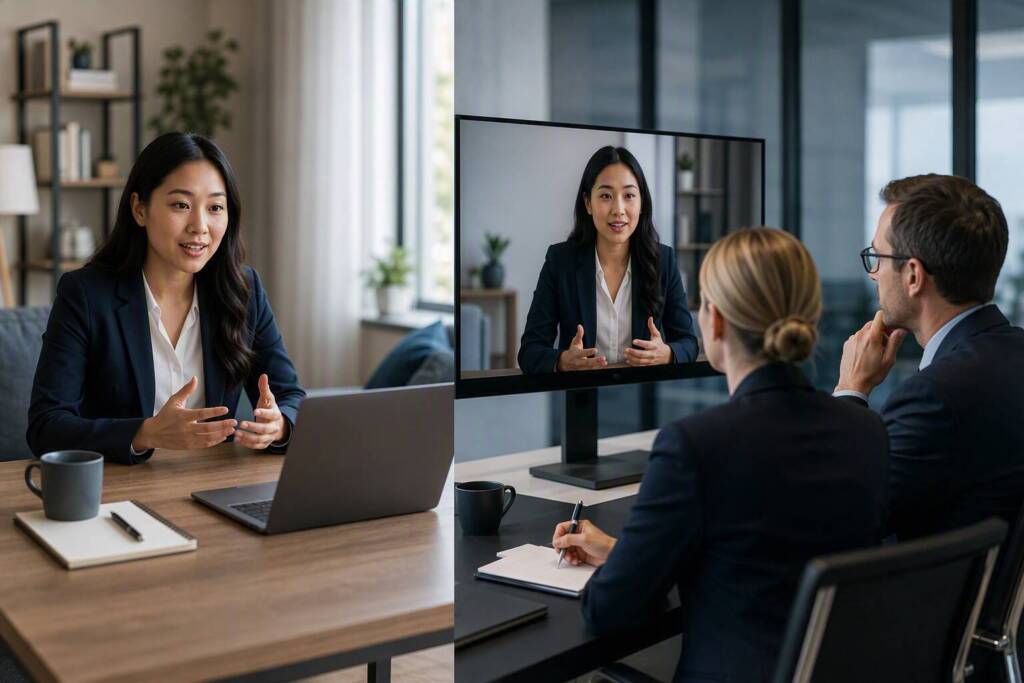
Video interviews are now an established feature of modern recruitment, but their value depends less on the technology itself than on how and when it is used. They can widen access, reduce costs, accelerate hiring and offer candidates flexibility. Those benefits must, however, be weighed against the risk that technical difficulties, unsuitable surroundings or discomfort on camera may affect performance in ways unrelated to a candidate's ability to do the job.
Employers should therefore be cautious about treating video interviews as a wholesale substitute for in-person assessment. The appropriate format will depend on the role, the stage of the recruitment process, and the needs of the candidate: video may work well for initial screening or where distance makes travel impractical, while later stages may benefit from direct personal interaction.
Fairness also requires preparation. Employers should apply consistent questions and criteria, give clear technical instructions, and offer reasonable adjustments - including an alternative format where appropriate. Any recording should be transparent and compliant with data-protection law.
The Prime Minister's intervention is a timely reminder that convenience should not be the sole consideration. A flexible, proportionate approach can preserve efficiency while giving every candidate a fair opportunity to demonstrate their suitability.
Employers: What This Means
Video interviews can form an effective part of a recruitment process, but they should not be adopted solely for convenience. Employers should decide whether the format is appropriate for the particular role and recruitment stage, while ensuring that candidates are assessed consistently and are not placed at a disadvantage by disability, technology or their personal circumstances. Employers must also comply with their equality and data-protection obligations throughout the process.
- Use structured, role-relevant questions and consistent assessment criteria, while recognising that standardisation does not eliminate unconscious bias.
- Give candidates clear joining instructions, explain the technology required and have a backup plan for connectivity or platform failures.
- Ask candidates whether they require reasonable adjustments and consider measures such as additional time, accessible technology, amended arrangements or an alternative telephone or in-person interview.
- Do not record interviews routinely. Where recording is justified, identify and document the purpose and appropriate lawful basis, inform the candidate in advance and give them an opportunity to raise concerns or object. Store the recording securely, limit access and apply a justified retention period.

