
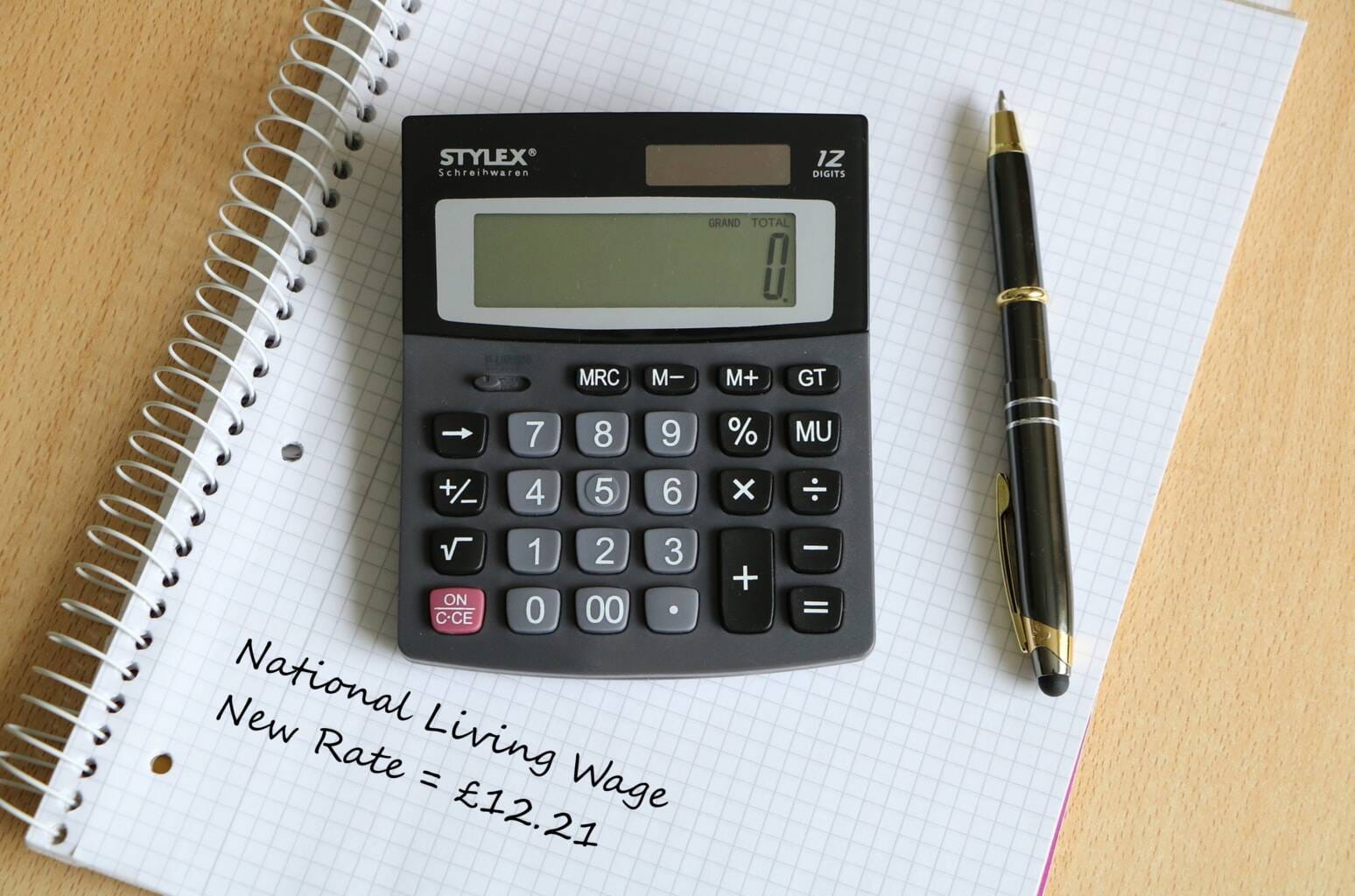
As we highlighted in an earlier post, the new rates for the National Living Wage and the National Minimum Wage that will apply from the 1st April 2025 were announced in advance of the 2024 Autumn Budget that was delivered by the Chancellor of the Exchequer, Rachel Reeves, on the 30th October 2024.
National Living Wage & National Minimum Wage Increases
The National Living Wage and National Minimum Wage increases that will apply from the 1st April 2025 will be as follows:-
- For workers aged 21 and over (i.e. the National Living Wage), the rate will increase by £0.77 per hour (6.7%) from £11.44 per hour to £12.21 per hour
- For workers aged 18-20 inclusive, the rate will increase by £1.40 per hour (16.3%) from £8.60 per hour to £10.00 per hour
- For workers aged 16-17 inclusive, the rate will increase by £1.15 per hour (18.0%) from £6.40 per hour to £7.55 per hour
- The apprentice rate will increase by £1.15 per hour (18.0%) from £6.40 per hour to £7.55 per hour
- The daily rate for the accommodation offset will increase by £0.67 (6.7%) from £9.99 to £10.66
Move Towards One Rate Across The Board
Labour undertook in its new deal plan to make changes to the National Living Wage by making it what it calls a “genuine living wage“. Under these proposals, one rate would apply across the board, with the age bands removed.
Gradual Phasing In
Nevertheless, on the 30th July 2024, the Secretary of State for Business and Trade, Jonathan Reynolds, announced that the move towards having one rate across the board for the National Living Wage would be phased in gradually over a period of time. That is, the National Minimum Wage age bands will remain for some time yet.
Accordingly, in line with the decision to gradually phase in the move towards having one rate across the board, the rates that apply to the age bands below the National Living Wage have all been increased by a higher percentage compared to that of the National Living Wage. Hence, the gap between the National Living Wage and the amount paid to those aged 16-17 and apprentices has narrowed from £5.04 per hour to £4.66 per hour. This gap is expected to continue to close until the point at which one rate ultimately applies across the board, although no timeframe has been set as to when that will happen.
Low Pay Commission Remit & Recommendations
In a letter to the Low Pay Commission (LPC), the Government updated its remit to factor in the cost of living when setting future rates, and it instructed it to ensure that the rate of the National living Wage does not fall below two-thirds of median earnings.
In setting the new rates for the National Living Wage, the Government implemented the recommendations from the Low Pay Commission in full.
The Chair of the Low Pay Commission, Baroness Philippa Stroud, stated: "The Government have been clear about their ambitions for the National Minimum Wage and its importance in supporting workers’ living standards. At the same time, employers have had to deal with the adult rate rising over 20 per cent in two years, and the challenges that has created alongside other pressures to their cost base. It is our job to balance these considerations, ensuring the NLW provides a fair wage for the lowest-paid workers while taking account of economic factors."
Stroud added: "These rates secure a real-terms pay increase for the lowest-paid workers. Young workers will see substantial increases in their pay floor, making up some of the ground lost against the adult rate over time."
The Real Living Wage & The London Living Wage
The Real Living Wage was increased on the 23rd October 2024 by £0.60 per hour from £12.00 per hour to £12.60 per hour, an increase of 5%, with those employers who are signed up to the scheme expected to implement the new rate by the 1st May 2025. The rate for the London Living Wage was increased at the same time as the Real Living Wage, with the rate increasing by £0.70 per hour from £13.15 per hour to £13.85 per hour, an increase of 5.3%.
Hence, the new rate for the National Living Wage of £12.21 per hour that will apply from the 1st April 2025 will be £0.39 per hour lower than the Real Living Wage and £1.64 per hour lower than the London Living Wage.
Commenting upon the 1st April 2025 increase in the National Living Wage, the Director of the Living Wage Foundation, Katherine Chapman, stated: “It is really positive to see increases to the minimum wage that will help workers keep pace with the cost of living, particularly as prices remain high. It is important to remember that the government’s rate is the legal minimum employers must pay — it is separate to the real Living Wage which is a voluntary standard and the only wage rate that is solely based on the cost of living. The real Living Wage is currently £12.60 an hour in the UK and £13.85 in London".
Chapman added: "More than 15,000 employers are already going beyond the legal minimum to ensure their regular and contracted staff like cleaners are always paid a real Living Wage and can live with security and dignity. This includes over half the FTSE 100, as well as thousands of smaller employers who see paying the real Living Wage as an investment in their workforce, leading to better morale, retention, and productivity".

